
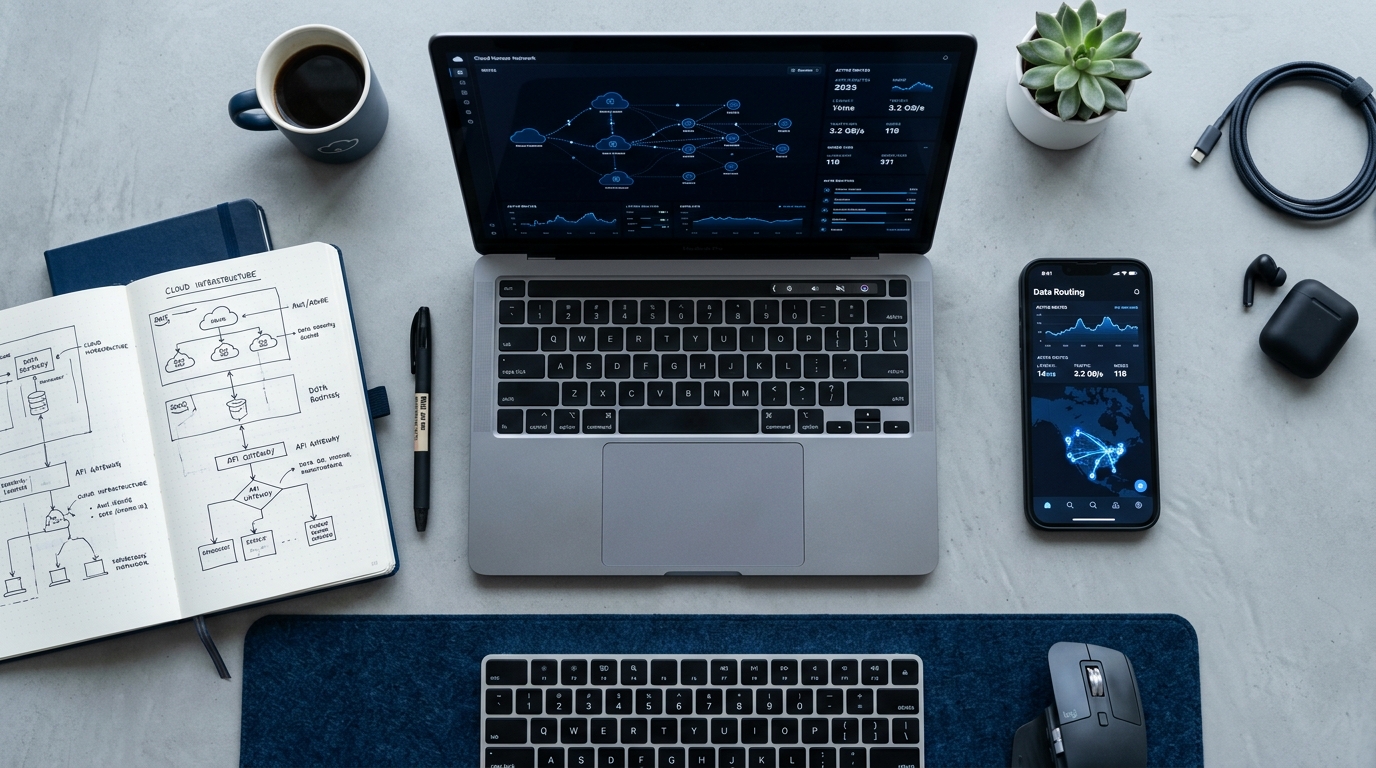
Are you still routing professional client calls through the exact same device and carrier number you use for family group chats? A modern voip phone system solves this structural problem by channeling a dedicated, isolated business line over your existing device's data connection. As a backend developer who spends my days optimizing cloud communication APIs and handling packet routing, I frequently see professionals using the wrong tools for their communication needs. They attempt to run businesses on disposable numbers designed for casual texting, leading to dropped calls, compromised privacy, and poor client experiences.
Choosing the right digital infrastructure is no longer just about convenience; it is a fundamental security and operational decision. This analysis compares the underlying technology of basic text applications with professional VoIP architectures, examining real-world performance data to help you select the most stable setup for your specific needs.
Analyze the 2026 Telecommunication Shift
To understand why the underlying architecture of your phone application matters, we first need to look at how user behavior and market expectations have shifted. The communication environment is currently undergoing a massive structural reorganization.
According to the Adjust Mobile App Trends 2026 report, the global mobile economy has reached an impressive scale, with consumer spending hitting $167 billion. The data shows a 10% increase in global app installs and a 7% rise in overall app sessions compared to the previous year. What this tells us as developers is that users are increasingly willing to invest in premium, high-performance applications rather than settling for ad-supported freeware.
Privacy is the other major driving force. The same Adjust report highlights that iOS App Tracking Transparency (ATT) opt-in rates climbed to 38% in Q1 2026, up from 35% in Q1 2025. Users are becoming highly protective of their data. When you mix your personal carrier number with public business directories or web forms, you effectively surrender your privacy boundary. Relying on a single identifier for everything creates a massive structural liability.
Compare Free Text Apps Against VoIP Phone Systems
When someone realizes they need an extra layer of privacy, their first instinct is often to search the app store for a free text app. They might download a tool like text now, text free, or textnow, hoping it will serve as a reliable business line. While these apps have their place, comparing them to a professional voip phone service is like comparing a bicycle to a commercial transit vehicle.
The Free Text App Architecture: Tools such as talkatone, text me, and textfree operate primarily on ad-supported models. On the backend, these applications must balance SIP (Session Initiation Protocol) voice data with heavy advertising SDKs. When network bandwidth drops, the application often struggles to prioritize voice packets over ad delivery. This is why a temporary burner number or a basic textplus line frequently suffers from latency, jitter, or dropped connections during an important call.

The Professional VoIP Architecture: By contrast, a dedicated voip service routes audio using optimized, unthrottled servers. When looking for the best voip for small business operations, professionals require guaranteed uptime. Instead of renting a pooled, frequently recycled number, a true VoIP setup offers a permanent identity. If you want a stable, isolated professional channel that protects your primary number, Second Phone Number DoCall 2nd's optimized routing infrastructure is designed for that exact outcome.
Evaluate International and Hardware-Based Alternatives
The communication market offers highly specialized tools, and understanding what each does best will prevent you from deploying the wrong solution.
For individuals who travel extensively, tools like airalo provide excellent international eSIM data routing, ensuring you have internet access across borders. However, data alone does not give you a localized voice presence. Similarly, applications like zangi or zangi messenger are built around secure, closed-network messaging, while boss revolution excels at providing prepaid international calling minutes to landlines. These are specific utility apps, but they do not function as a comprehensive 2nd phone number that clients can dial directly.
On the other end of the spectrum are hardware-dependent voip providers. Legacy systems, such as a traditional ooma phone setup, often require physical base stations or desk phones. While these voip phone systems are stable, they lack the mobility required by modern freelancers and distributed teams. You want the reliability of an enterprise desk phone packed into a lightweight mobile application.
Select the Right Communication Tool for Your Workflow
When evaluating your options, I recommend applying strict criteria to filter out inadequate tools. The performance of the application directly impacts your professional image. Industry benchmarks indicate that approximately 70% of users will delete a slow or poorly optimized application after the first use. If your chosen communication app takes too long to connect a call or fails to load messages instantly, it will actively harm your workflow.
- For Quick Online Verifications: If you just need to bypass a one-time SMS verification for an online forum, a disposable free text tool is sufficient. The lack of long-term stability won't impact you here.
- For Client Interactions and Freelancing: You need a consistent local presence, such as a localized 213 area code. This requires a premium voip phone architecture that supports direct inward dialing without forcing the caller to move through automated menus.
- For Global Data Connectivity: Use eSIM providers to maintain your internet connection while traveling, and route your VoIP application over that data connection.
To see how these concepts fit into broader software ecosystems, you can look at the performance standards maintained by Dynapps LTD, which builds utility applications focused on speed, secure data handling, and native AI integrations.
Answer Common Network Configuration Questions
Before deploying a new communication channel, users frequently ask me the same infrastructure questions. Here is a direct breakdown to help you finalize your setup.
Does a virtual number rely on cellular towers?
Not directly. A VoIP application packages your voice into digital data and sends it over your existing Wi-Fi or LTE/5G connection. If your internet connection is stable, your call quality will remain high, completely bypassing traditional carrier voice limits.
Why shouldn't I just buy a second physical device?
Carrying a second physical phone doubles your hardware costs and introduces unnecessary battery and security management. Virtual numbers provide the same logical separation without the physical burden of an extra handset.
Can I port my existing business number into a modern application?
This depends on the platform, but top-tier communication tools typically support number porting, allowing you to migrate away from expensive legacy carriers into a more flexible cloud environment.
Audit Your Current Communication Stack
Look at your current phone setup. If you are mixing client texts, automated banking alerts, and personal family calls in the same inbox, your data architecture is fundamentally disorganized. The transition away from unreliable text applications toward professional, cloud-based systems is no longer a future trend; the 2026 data shows it is the current standard.
By migrating your professional identity to a dedicated cloud system, you eliminate the risk of accidental cross-communication, improve your voice reliability, and finally establish a clean digital boundary on your primary device.