

In 2024 alone, users downloaded finance applications over 7 billion times, spending a massive 21 billion hours managing their digital wealth. According to the highly anticipated 2026 Mobile App Trends report by Adjust, digital wallets and instant payment networks are on track to drive $3 trillion in global payment revenue by 2028. We are managing more wealth, client data, and sensitive operations on our mobile devices than ever before.
Yet, From an industry-observer perspective observing these trends, I see a glaring contradiction. While professionals actively secure their portfolios and e-commerce platforms with advanced cryptography, they frequently tie those same accounts to a generic free text app. Treating a high-stakes digital identity with the same casualness as a disposable communication channel is a structural liability. The infrastructure you use to communicate must match the security of the assets you are protecting.
The Danger of the Disposable Mindset in a Privacy-First Era
The era of quickly grabbing a burner number to bypass a verification screen is ending. The Adjust report highlights that App Tracking Transparency (ATT) opt-in rates continued to rise in the first quarter of 2026, indicating that users are more conscious of their data privacy than ever. Unfortunately, the traditional "text now" mindset actively works against this progress.
Historically, when people needed to separate their work and personal lives, they would search for ad-supported solutions. They might download a basic TextFree tool, use Talkatone for a quick call, or spin up Zangi Messenger just to keep a client off their primary caller ID. These tools serve a purpose for casual, temporary use. However, they rely on number pooling and frequent recycling. If you abandon your account, that same number is often reassigned to someone else weeks later.
Imagine tying a rapidly growing e-commerce business—a sector that saw session times increase by 5% year-over-year—to a recycled Text Me number. Or worse, using a temporary Google Voice setup to handle two-factor authentication for a client's server. You do not own the routing; you merely rent the convenience.
Moving Beyond Basic Solutions: What Defines True Virtual Infrastructure?
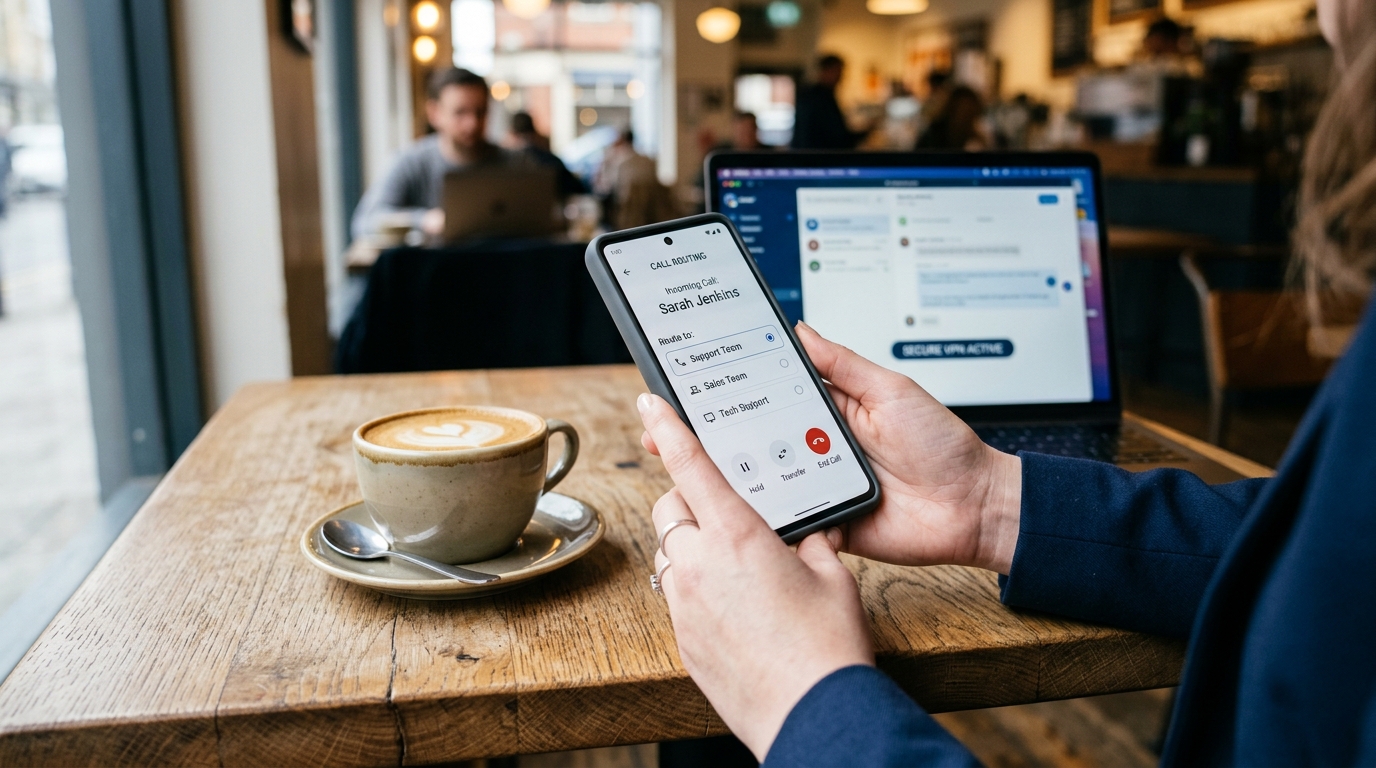
To understand the shift away from legacy disposable tools, we need to clarify what the modern alternative actually is. A professional VoIP (Voice over Internet Protocol) phone service is a dedicated, software-based communication infrastructure that routes calls and messages securely over the internet, providing permanent number ownership, persistent identity, and strict data isolation without requiring a secondary physical SIM card.
This is fundamentally different from a consumer-grade textPlus or LINE account. A true VoIP phone system acts as a distinct boundary. It allows you to maintain a professional identity—such as holding a permanent 213 area code to establish a local presence in Los Angeles—while completely isolating that traffic from your personal carrier data. In the past, achieving this level of separation required bulky enterprise hardware or a physical Ooma phone sitting on a desk. Today, the entire architecture lives securely on your primary device.
As my colleague Can Arslan covered in detail regarding transaction-grade isolation replacing the standard second line, the distinction between a temporary text app and a permanent VoIP setup is no longer just about convenience; it is about risk mitigation.
Are You the Right Candidate for a Dedicated VoIP Phone Service?
Not everyone needs a permanent secondary communication architecture. If you are simply trying to verify a one-time discount code for an online retailer, a generic free text app might suffice. That is the exact scenario those apps were built to handle.
However, you need to transition to a dedicated 2nd phone number if you fall into any of these categories:
Independent Contractors and Consultants: If you manage multiple clients and require a consistent professional identity that travels with you globally, you need reliable routing. Relying on a patchwork of TextNow accounts creates friction and damages client trust.
Crypto and Digital Asset Managers: The Adjust data projects that crypto applications will reach 580 million users by 2025. Tying exchange accounts to a carrier SIM leaves you vulnerable to SIM-swap attacks, while using a recycled burner leaves you vulnerable to number reassignment. You need an isolated, non-carrier number.
Small E-Commerce Teams: If you are evaluating the best VoIP for small business operations, you need a system that supports consistent inbound customer inquiries. A proper VoIP phone service ensures you do not lose your business line just because you logged out of an app for thirty days.
Real-World Decision Criteria for Selecting VoIP Providers
When When consulting with remote teams on auditing their communication stack, I notice a common mistake: they search for generic VoIP providers without understanding their own infrastructure requirements. They end up comparing apples to oranges, pitting enterprise call-center software against an ad-supported text free app.
To choose the right tool, look at the underlying architecture. First, prioritize number permanence. You want a service that guarantees your chosen number remains yours as long as your subscription is active, protecting you from aggressive recycling policies. Second, evaluate the routing quality. Voice traffic is highly sensitive to latency; a reliable VoIP phone should maintain call clarity whether you are on home Wi-Fi or a cellular network.
This is precisely where tools like Second Phone Number DoCall 2nd differentiate themselves. Instead of offering a chaotic, ad-heavy interface designed for temporary use, it functions as a streamlined VoIP service built for professionals. It grants you the ability to select a specific local identifier, maintain strict boundaries, and handle client communication with the stability of a traditional carrier line.

Practical Questions I Hear About Virtual Infrastructure
Transitioning from traditional telecommunications to a software-defined phone setup often raises practical concerns. Here are the most frequent questions I encounter from professionals making the switch.
Can a VoIP service replace my physical carrier entirely?
Strictly speaking, VoIP requires an internet connection to function. However, the modern remote work stack has evolved. I frequently see digital nomads pair a data-only travel eSIM, like Airalo, with a dedicated VoIP phone. This combination provides smooth global data while maintaining a consistent home-country phone number for voice and text, entirely bypassing expensive carrier roaming fees.
Why do some platforms reject virtual numbers during registration?
Many financial institutions maintain databases of known temporary number blocks associated with generic text apps and Zangi-style platforms to prevent fraud. When you use a high-quality VoIP provider that utilizes true Direct Inward Dialing (DID) numbers, you significantly reduce the friction associated with these security filters, as the numbers are classified differently by telecom databases.
Does using a virtual line drain my battery faster?
Legacy internet calling apps were notorious for keeping background processes awake, draining battery life. Modern VoIP phone systems integrate natively with your smartphone's push notification architecture. The app remains dormant until the server signals an incoming call or message, resulting in a battery profile nearly identical to native messaging apps.
The convergence of mobile finance, remote consulting, and e-commerce is forcing a reevaluation of how we manage our digital identities. Forward-thinking developers at Dynapps LTD understand that the future of mobile utilities lies in intentional, secure design. We are moving past the era of disposable communication. If you are managing serious professional assets, it is time your phone infrastructure reflected that reality.