

The mobile communication market in 2026 is shifting rapidly away from disjointed, ad-supported texting tools toward integrated, privacy-focused VoIP phone systems. This transition is directly driven by a 10.6% surge in mobile consumer spending and a growing user demand for centralized, secure platforms rather than temporary workarounds. As someone who has spent the last ten years engineering telecommunications solutions, I am watching a fundamental correction take place: users are finally treating their digital communication channels with the same operational seriousness as their bank accounts.
Consider a typical independent consultant operating today. A few years ago, her setup was highly fragmented. She used her personal phone plan for friends, downloaded a free text app to register for software trials, and tried managing client calls through an unstable patchwork of Talkatone, Zangi, or TextMe. When traveling, she might rely on an Airalo eSIM for data while hoping her domestic calls would forward properly. It was a stressful, unmeasured mess. Today, the expectations have changed completely. Professionals no longer want to juggle disposable applications; they want a single, reliable communication layer that handles everything from local presence to intelligent routing.
Why are disjointed communication apps failing modern users?
In the early days of mobile telecommunications, simply having access to an extra line was enough. People downloaded applications like TextNow, TextFree, or Line primarily to avoid international calling fees or to bypass SMS charges. The barrier to entry was incredibly low, but so was the quality. You traded your data for a temporary number, and if a call dropped during an important client meeting, it was just accepted as the cost of using a free text app.
Today, that tolerance has vanished. Modern independent workers, small business owners, and remote teams demand consistency. If you are trying to close a contract, you cannot rely on an ad-supported burner app that might recycle your number if you forget to log in for a week. The disjointed model fails because it forces users to act as their own IT administrators, stitching together Google Voice for voicemail, a Zangi messenger account for encrypted chats, and Boss Revolution for overseas vendor calls. This fragmentation creates dropped connections, missed messages, and a highly unprofessional image. A true VoIP phone system solves this by unifying voice, text, and routing into one managed environment.
What does a $167 billion mobile economy mean for VoIP providers?
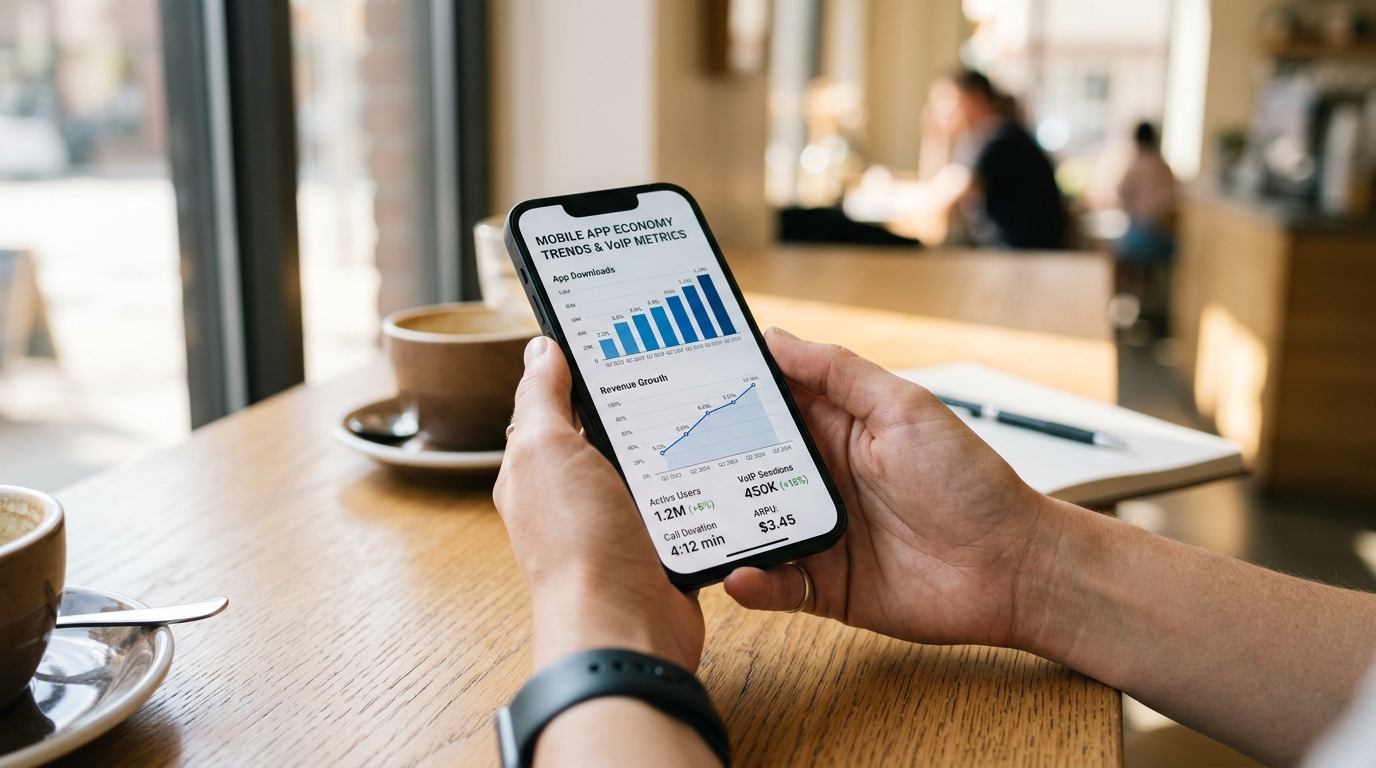
To understand why this shift is happening right now, we have to look at the underlying financial and behavioral data. According to the newly released "Mobile App Trends 2026" report by Adjust, the mobile app economy is undergoing a massive transformation. The data shows that consumer spending increased by 10.6% last year, reaching an incredible $167 billion globally. Furthermore, global app installations grew by 10%, and active sessions increased by 7%.
What this tells us as engineers and developers is that users are highly willing to pay for premium, reliable experiences. The era of tolerating subpar ad-supported tools is fading. Consumers are actively opening their wallets for applications that offer real utility, clean interfaces, and dependable service. In the telecommunications sector, this translates to a mass migration away from generic TextPlus or TextFree clones toward legitimate VoIP providers. Users realize that a dedicated second phone number is an investment in their professional brand and personal sanity, not just a temporary throwaway tool to verify an online account.
How is privacy changing the way we choose a VoIP phone service?
Privacy is no longer just a regulatory buzzword; it is a measurable consumer demand that directly impacts application architecture. The same Adjust 2026 report highlights a critical metric regarding user behavior: App Tracking Transparency (ATT) opt-in rates among iOS users rose from 35% in the first quarter of 2025 to 38% in the first quarter of 2026. While a slight increase in opt-ins exists, the clear reality is that the vast majority of mobile users actively reject cross-app tracking.
This tracking limitation is a death knell for apps that monetize entirely through invasive advertising. If an app cannot accurately track your behavior to serve highly targeted ads, its revenue drops, leading to degraded server maintenance and poorer call quality. This is precisely why professionals are abandoning ad-heavy platforms and seeking out a paid VoIP service. When you pay directly for your telecommunications routing, you are the customer, not the product. By separating your personal identity from your public-facing work through a secure system, you prevent data brokers from linking your personal life to your business activities.
Why is AI infrastructure replacing the traditional burner setup?
For a long time, the telecommunications industry viewed artificial intelligence as an experimental feature. In 2026, AI has transitioned from an industry talking point into the core measurement and routing architecture of the mobile economy. The Adjust report emphasizes that mobile growth is now determined by AI-supported analysis and multi-platform measurement architecture rather than simple campaign tweaks.

In practical VoIP engineering, this means the software natively understands how to segment and route communication. Older systems would just ring your phone indiscriminately. Modern architecture filters out spam, categorizes voicemails, and optimizes the audio codec dynamically based on your connection quality. As my colleague Berk Güneş explained in a recent post on AI infrastructure and VoIP smart routing, these backend improvements are exactly what separate a modern professional line from the disposable apps of the past. The technology manages the noise so you can focus on the actual conversation.
Which VoIP phone system actually fits small business needs?
When selecting the best VoIP for small business or freelance operations, the criteria must be practical. Hardware-heavy setups like a traditional Ooma phone system are excellent for physical retail locations or large corporate offices, but they are entirely impractical for a remote consultant or a digital nomad. Conversely, legacy digital tools like Google Voice often fall short for modern users due to restrictive geographic limitations and a lack of dedicated support.
A modern user needs software that operates flawlessly on the device they already own. If you want a localized presence, such as presenting a 213 area code to clients in Los Angeles while you work from another state, a software-based approach is required. This is where applications like Second Phone Number DoCall 2nd fit naturally into the ecosystem. By acting as a comprehensive VoIP phone service on your existing mobile device, it provides the clear boundary between personal and professional life without the overhead of enterprise contracts or physical hardware.
How do you future-proof your communication stack?
The telecommunications ecosystem will only become more integrated. As a mobile app company, Dynapps LTD closely monitors these infrastructure shifts to ensure applications meet the rising standards of a $167 billion app economy. Relying on an outdated mix of TextNow tools and disjointed messaging apps is a liability.
Future-proofing your communications means adopting tools that treat your secondary line with the same technical respect as your primary carrier. It means prioritizing applications that utilize modern measurement architecture, respect tracking boundaries, and offer consistent call reliability. The shift from disposable numbers to resilient, intelligent communication systems is already complete. The only question is how quickly you adapt your own daily workflow to match it.